

When someone you love is living with a serious illness, your feelings can be hard to name. You may feel sad, anxious, irritable, numb, or even guilty, sometimes all in the same day. Many caregivers are surprised to learn there is a name for this experience: anticipatory grief.
At Melodia Care, we support caregivers as well as patients. This guide explains what anticipatory grief is, why it happens, and gentle ways to care for yourself while you care for someone else.
What Is Anticipatory Grief?

Anticipatory grief is the emotional response people feel before an expected change, while a loved one is still here. It often begins when a family learns about a serious diagnosis or sees a loved one’s health change over time.
The term was first described by psychiatrist Erich Lindemann in the 1940s. Today, it is widely recognized by doctors, counselors, and hospice teams as a normal and common experience.
Anticipatory grief isn’t only about the future. Families often grieve changes that are already happening, such as:
- A parent who no longer recognizes familiar faces because of dementia
- A spouse who can no longer share hobbies, travel, or conversations the way you used to
- Changes in roles, such as a child becoming a parent’s caregiver
- Plans and dreams for the future that may now look different
Common Signs of Anticipatory Grief
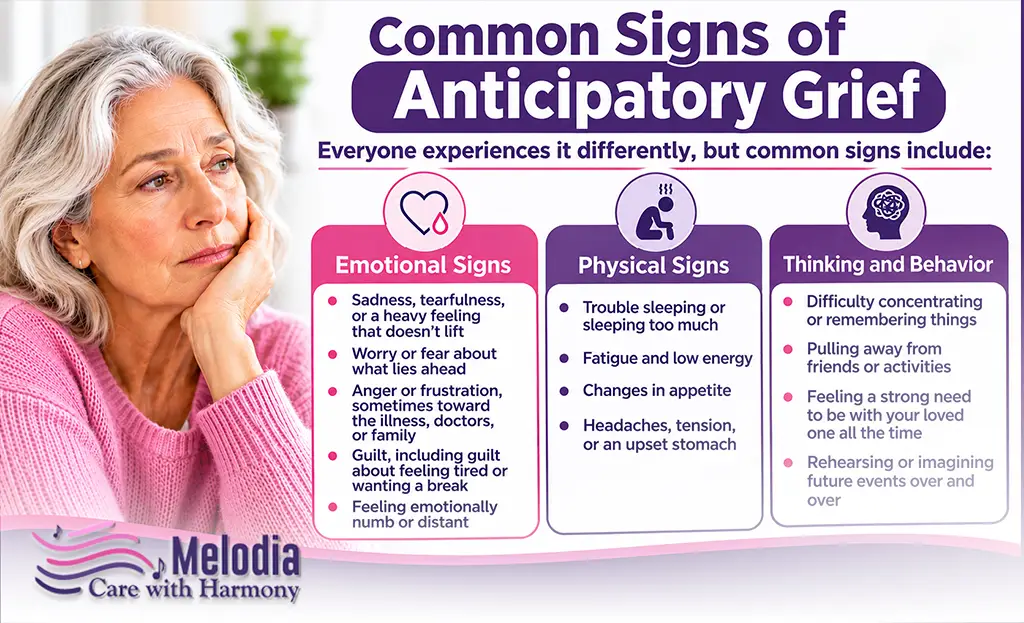
Everyone experiences it differently, but common signs include:
Emotional signs
- Sadness, tearfulness, or a heavy feeling that doesn’t lift
- Worry or fear about what lies ahead
- Anger or frustration, sometimes toward the illness, doctors, or family
- Guilt, including guilt about feeling tired or wanting a break
- Feeling emotionally numb or distant
Physical signs
- Trouble sleeping or sleeping too much
- Fatigue and low energy
- Changes in appetite
- Headaches, tension, or an upset stomach
Thinking and behavior
- Difficulty concentrating or remembering things
- Pulling away from friends or activities
- Feeling a strong need to be with your loved one all the time
- Rehearsing or imagining future events over and over
Anticipatory Grief vs. Depression
Anticipatory grief and depression can look similar, but they’re not the same. Grief usually comes in waves and still leaves room for moments of joy, connection, and laughter. Depression tends to be more constant and can include a lack of interest in almost everything, feelings of hopelessness, or thoughts of self-harm.
If your feelings are overwhelming, last most of the day nearly every day, or make it hard to function, please talk with your doctor or a mental health professional. Our article on sadness vs. depression explains the differences in more detail.
Why Anticipatory Grief Can Feel Confusing
Many caregivers feel conflicted. You may want more time with your loved one while also feeling exhausted by the demands of care. You may feel guilty for imagining the future. These mixed feelings are normal. They don’t mean you love the person any less. They mean you are human and carrying a lot.
Some family members may experience anticipatory grief strongly, while others don’t seem to feel it at all. Different reactions are normal too, and they can sometimes cause tension. Open, kind communication helps.
Gentle Ways to Cope
1. Name what you’re feeling
Simply recognizing “this is anticipatory grief” can bring relief. Writing in a journal or talking with someone you trust can help you understand your emotions.
2. Make the most of the time you share
Focus on meaningful moments: looking at old photos, listening to favorite music, sharing stories, or simply sitting together. Many families find comfort in music therapy and simple shared activities.
3. Say what matters
Don’t wait for the “right” time to say thank you, I love you, or I’m sorry. These conversations can bring peace to everyone.
4. Take care of your body
Eat regular meals, drink water, get fresh air, and rest when you can. Small steps make a real difference to how you cope.
5. Accept help
Let friends and family take on specific tasks like meals, errands, or a few hours of company. Hospice respite care can also give you a short, well-earned break.
6. Watch for burnout
Anticipatory grief and caregiver burnout often go hand in hand. Learn the signs of caregiver burnout so you can act early.
7. Connect with others
Caregiver support groups, faith communities, and counselors can remind you that you are not alone.
How Hospice Supports Caregivers
Hospice care is designed for the whole family, not just the patient. At Melodia Care, our interdisciplinary team includes:
- Social workers who offer emotional support, counseling, and help with planning
- Chaplains who provide spiritual support for people of all faiths and beliefs
- Nurses and aides who take on hands-on care so you can simply be with your loved one
- Volunteers who offer companionship and give caregivers time to recharge
- Bereavement counselors who continue supporting families for about a year
Learn more about how hospice providers help with emotional support.
Is anticipatory grief normal?
Yes. It is a very common and natural response when someone you love is seriously ill.
Does anticipatory grief make later grief easier?
For some people it brings a sense of preparation, while others still find the later stages very hard. There is no right or wrong way to feel.
Can patients feel anticipatory grief too?
Yes. People living with a serious illness often grieve changes in their independence, abilities, and future plans. Hospice teams support patients with these feelings as well.
When should I seek professional help?
Reach out to a counselor or your doctor if your feelings are overwhelming, constant, or affecting your ability to eat, sleep, or function day to day.
You Don’t Have to Carry This Alone
Caring for someone you love is one of the most meaningful things you can do, and one of the hardest. If you or your family need support, call Melodia Care at 1-888-MELODI-7. Our team is here to walk alongside you, with care in harmony.