

Families often begin the hospice journey expecting that their loved one has only a few days or weeks left. But sometimes, the days turn into weeks—and then months. And in that extended space, a quiet, often unspoken question arises:
Why is my loved one still holding on?

It’s a question filled with love, confusion, and—sometimes—emotional exhaustion. You have said your goodbyes. You have cleared your calendar. You have prepared for the end. But your loved one remains—peaceful, still, quietly resting in a bed that has held more sunsets than expected.
At Melodia Care, we’ve seen this happen often. And we want you to know—it’s not uncommon. There are reasons for it, and it doesn’t mean anything is wrong.
It simply means that life and death do not always follow a timeline.
Why Is My Loved One Still Alive?
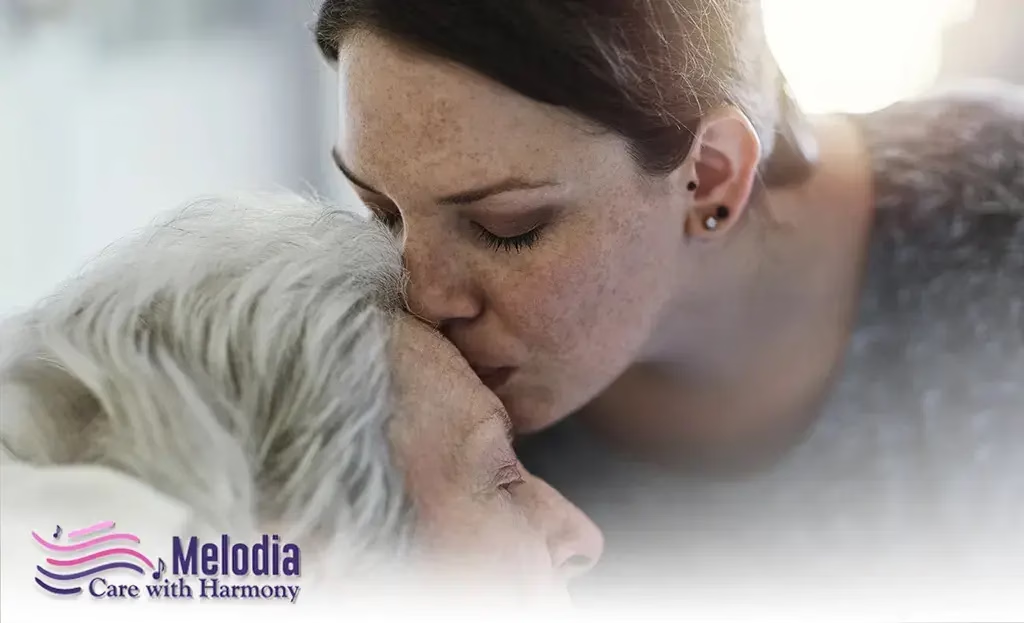
One of the most misunderstood aspects of end-of-life care is the idea that dying is predictable. While doctors may estimate six months or less for hospice eligibility, those estimates do not always match the body’s timeline. Every person’s body, spirit, and story is different.
Here are a few common reasons a patient may live longer than anticipated while on hospice:
1. Their Body Is Stronger Than Expected
Even with a serious illness, some individuals still have relatively strong organ systems. Their heart, lungs, or kidneys may continue functioning longer than anticipated. The disease is still progressing—but more slowly than predicted.
2. Emotional or Spiritual Closure Is Not Complete
Some people seem to wait. For a relative to arrive. For words of forgiveness or gratitude. For something unseen but deeply meaningful. It is not medical—but it is real. Families often notice that once these emotional or spiritual pieces fall into place, their loved one can let go.
3. Comfort Care Improves Their Stability
Hospice care focuses on comfort, not cure—but comfort itself can have powerful effects. Relief from pain, better sleep, nutritional support, and human connection can create a sense of calm that supports longer survival, even if the underlying illness continues to progress.
4. Their Will to Live Remains Strong
Some people are just not ready. Even without speech or movement, something inside them may be choosing to stay. It’s not resistance—it’s just their journey unfolding the way it needs to.
What This Means for Families

Being with someone who’s dying isn’t just about their timeline. It’s also about your emotional space. Some days you may feel patient and peaceful. Other days, you might feel frustrated, tired, or guilty for wishing the process would come to an end.
All of that is normal.
At Melodia Care, we gently remind families: this is sacred time. Even if your loved one is not speaking or responding, your presence still matters. But it is also okay to step away—rest, breathe, and go outside. Hospice is not only about the patient’s peace. It is about your well-being, too.
Does This Mean Hospice Care Will End?

Not at all. As long as your loved one meets hospice criteria—meaning they still have a life-limiting illness and show signs of decline—they can continue receiving hospice care. Medicare and most insurance providers allow for ongoing care through recertification, often every 60 or 90 days.
How Can I Help Them Let Go?

Death cannot be rushed. But you can create a peaceful space that supports your loved one’s readiness. Here are a few gentle ways to help:
- Speak openly: Simple, heartfelt words like “You can go when you are ready” or “We love you—we’ll be okay” can bring deep reassurance.
- Clear the air: Sometimes, unspoken feelings—I forgive you, I’m sorry, thank you—are what the heart is waiting to hear.
- Create a calm environment: Soft music, prayer, natural light, or simple silence can ease the transition.
- Let hospice guide you: We can help interpret signs of holding on or letting go, and offer guidance for creating a peaceful setting.
FAQs
What if my loved one improves during hospice?
If their condition improves significantly and no longer meets hospice criteria, they may be discharged. However, they can return to hospice if their condition worsens again in the future.
Can people really “wait” to die?
Yes. Many families notice their loved one passes shortly after a meaningful visit, a reconciled relationship, or the arrival of someone special. The human spirit plays a powerful role in this process.
What are the signs that the end is near, even if it takes time?
Changes in breathing, cool extremities, long periods of sleep, decreased appetite, and detachment from surroundings often signal that the body is preparing for death—even if that process unfolds slowly.
Is it okay to feel exhausted or emotionally drained?
Absolutely. It is normal to feel overwhelmed during this time. You are human. Hospice care includes support for you, too—physically, emotionally, and spiritually.
How long can someone stay in hospice care?
There is no fixed limit. As long as medical eligibility is met and the individual shows ongoing signs of decline, hospice care continues—no matter how long the journey lasts.
Conclusion
When a hospice patient lives longer than expected, it is not a delay or a mistake. It is simply a different rhythm—a slower unfolding of goodbye on their terms.
At Melodia Care, we are honored to walk beside you—whether that means days, weeks, or many quiet months. Every moment is meaningful. Every day is a chance for comfort, connection, and dignity.
If you are feeling unsure, overwhelmed, or simply need to talk, our team is always here.