
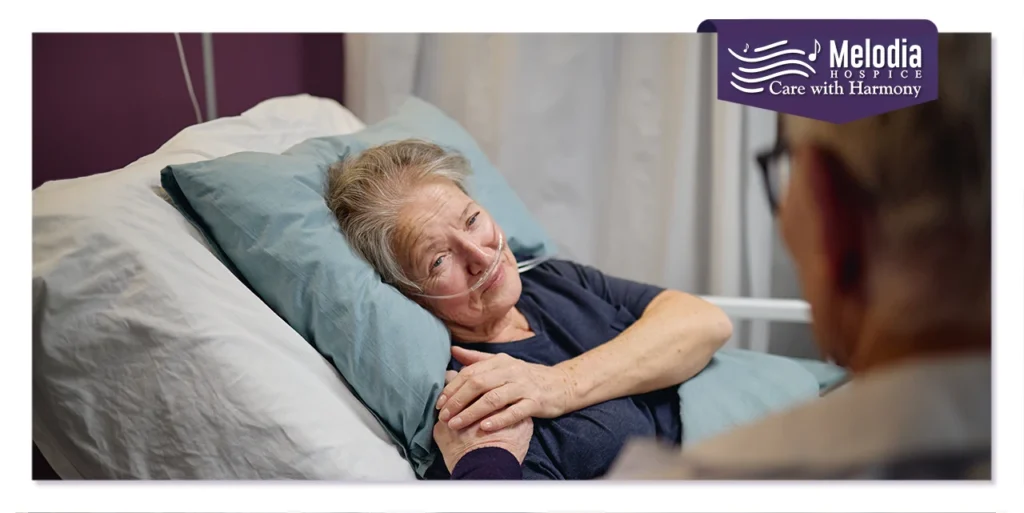
When family members encounter medical terminology during their discussion about their patient’s health, it may seem confusing.
Two terms that can sound similar, but are actually two different things, are “prognosis” and “diagnosis”.
Both are essential, and both form the basis of the care plan; each has a different function. Understanding them will help families make educated choices and feel more secure during difficult times.
A diagnosis is a description of what’s taking place in the body at the moment. A prognosis describes what is likely to occur in the near future. When these two concepts are discussed together, families can get an understanding of the patient’s health requirements, as well as the overall process. We at Melodia Care, aim to help families comprehend these concepts to help them navigate the care process with confidence and peace of mind.
What Is a Diagnosis?

“Diagnosis” is the word used to describe the condition that affects an individual. It is determined by scans, tests, physical examinations, and medical information. The objective is to determine the root cause so that the healthcare team understands what they’re dealing with. For instance, ailments such as heart failure, COPD, advanced cancer, kidney disease, or dementia are diagnosed. Each diagnosis gives the care team a base from which to develop a suitable plan.
A diagnosis concentrates on the current situation. It addresses the question “What is happening to the body right now?” When the diagnosis is established, it is possible for the team to comprehend the patient’s symptoms, issues, and requirements. Knowing this will help determine the kind of care needed to manage discomfort, enhance breathing, or help with everyday activities.
What Is a Prognosis?

“Prognosis” is a description of what doctors anticipate occurring over the course of time. Instead of focusing on the present moment, the prognosis looks forward. It considers how fast the condition will advance, which symptoms could develop later, and the way the patient’s overall health is likely to alter. A prognosis isn’t an absolute forecast. It’s an estimate that is based on the experience of medical professionals, as well as past experiences and the individual’s particular health condition.
A prognosis aids families in understanding the things to be prepared for, what to prepare for, how to plan, and what type of assistance could be needed during the next few weeks or months. It helps answer questions regarding the future of mobility, comfort, appetite, breathing, or even daily routines. While there is no exact prediction, it provides guidance to the families during a time of uncertainty.
Why Both Matter
disease will look like. A prognosis provides the probable future path, but it relies heavily on the diagnosis that is correct. Together, they enable the medical team to build an entire assessment of the individual’s health. This is the basis for decisions on the best measures for comfort, including emotional support, as well as family planning.
Families frequently say that having both of them is helpful in reducing confusion. If they know the current medical scenario as well as the future, they would be more well-prepared. This helps them make quick decisions, plan support, and concentrate on what is most important. This improves communication between family members and the caregivers.
How Diagnosis Helps Your Care Plan

A diagnosis can help the team determine what symptoms are related to the illness. For instance, someone suffering from advanced heart disease may be struggling with a state of breathlessness, swelling, or fatigue. People with dementia might experience confusion, memory loss, and difficulties with communication. If the caregivers are aware of the root of the problem, they can decide on the most appropriate approach to help them feel at ease.
The diagnosis also influences the choice of medication. Different ailments respond differently to treatments. So, precision is important. This allows the team of caregivers to modify support quickly, particularly when symptoms alter. A clear diagnosis is the basis of safe and efficient treatment.
How Prognosis Helps Families Prepare
A prognosis aids families in understanding the speed as well as the direction of their journey. It helps them prepare both emotionally and practically. Families are aware of when they might require extra help at home, or when mobility could decline, or when safety measures are more crucial. This helps bring calm in stressful times.
A well-thought-out prognosis can also help in managing time. Families can plan their visits, create meaningful memories, and make time for moments spent with each other. Knowing the future can create the space for reflection, acceptance, and connection.
How the Care Team Uses Diagnosis and Prognosis Together
The care team examines both the diagnosis and the prognosis in order to formulate a plan that meets the individual’s requirements. They look over medical records, observe the symptoms, and talk to family members to learn about the daily routines. Armed with this information, they can select the best treatment options for managing the pain, assisting with breathing, or offering emotional support.
The prognosis can help the team adapt the plan as time passes. As the patient’s condition improves, the plan of care changes as well. This helps ensure that the patient is comfortable and well-supported. Combining prognosis and diagnosis gives the team a plan that changes according to the patient’s requirements.
Supporting Families Through the Process
The process of receiving a diagnosis or hearing the outcome of a prognosis may be emotionally taxing. Families might feel fear or sadness. Communication is a key part in alleviating these feelings. Melodia Care believes in giving explanations in a simple language, responding to questions, and allowing families the opportunity to voice their worries.
The support goes beyond medical treatment. Families require emotional support and guidance as well as empathy. Being able to be open about the treatment and treatment options, helps families to feel less lonely. It gives strength during difficult times and helps build trust between family members and the medical team.
Common Misunderstandings
Many people believe that a diagnosis is a guarantee of what has to come, but it is not so. A person with the same illness may develop differently from someone else. Things like age, overall health, and responses to treatment make every journey individual. This is why the prognosis must be customized and regularly reviewed.
Another misconception is that a prognosis is definitive. It’s not as. It could change according to the health of the patient, any new symptoms, or up-to-date medical information. The prognosis should be viewed as a guideline and not as a timeframe. Being informed helps families to adjust without fear.
FAQs
What is the primary difference between prognosis and diagnosis?
A diagnosis describes the medical issue that is present at the moment, while a prognosis is a description of how the condition could develop in the near future.
Do prognosis predictions change?
Yes, it can. Prognoses are based on the current health information available and may be revised as the health condition alters.
Do you believe that a prediction is always exact?
It is a guess, not a promise. It aids in planning but cannot predict the future with any certainty.
What is the reason a diagnosis is crucial in planning care?
It determines the problem, which aids the team in understanding the symptoms and determining the best strategy to ensure peace of mind and support.
Why should families know about the future?
It assists families in making decisions, recognizing the future needs, and planning memorable times together.
Is diagnosis and prognosis made clear to family members?
Yes, both are clearly explained to ensure that families are aware of the nature of illness and what they can expect. Communication is encouraged and open.
Do diagnoses affect the quality of medical care?
Yes, different conditions require different care strategies. Being aware of the diagnosis can ensure that strategies are efficient and appropriate.
Who is the person who gives their prognosis?
Medical specialists, often the doctors, give the prognosis on the basis of the medical history, test results , and overall health.