There are few things more difficult than witnessing a loved one with a life-limiting illness deteriorate. When families learn their loved ones have stopped eating and drinking, it gets considerably more difficult.
Many family customs center on food and drink as a means of expressing love and care, so they question whether they are being negligent—even cruel—by not making sure their loved one gets food and drink. They could believe they had given up on them.
Nothing could be further from the truth. It is just a normal aspect of dying. Food and drink are much less needed than those of an active, healthy individual.
Hospice care does not deny food or drink to a patient. If a patient wishes to eat or drink, there are no limitations. However, for most patients, there comes a time when they desire neither food nor drink.
Physical Changes at the End of Life in Hospice Care

As a person nears the end of life, their body loses the ability to digest and metabolize food and liquids. Organs and other body systems start to fail, and minimal amounts of food or liquids are required if necessary.
Your insistence on your loved one getting food and water—including artificial nourishment or hydration via nasal or stomach feeding tubes—can be upsetting. Liquids and food forces can lead to more physical issues and discomfort.
Swelling of the hands, feet, and legs can start as the body loses control over fluid. Worse, it can lead to lung enlargement, resulting in coughing, dyspnea, and insufficient oxygen intake into the blood. This is called hypoxia. Confusion, irritability, and even combativeness can result from hypoxia.
For loved ones at the end of life, feeding might cause particular problems. Food force could result in aspiration or choking, and food or liquids aspirating into the lungs can be unpleasant. Just as liquids would, food can cause coughing and dyspnea. It can also cause constipation, diarrhea, nausea and vomiting, stomach bleeding, and too much gas.
To someone who is dying, all of these can be particularly distressing. For someone who is well, these sensations are uncomfortable at best, but for someone nearing death, they are far worse.
Though we consider food and drink as means of comfort and expression of love, in death, this may not be the case. How can we then demonstrate our love and help our loved ones feel more at ease during this period?
How You Can Help Your Loved One in Hospice Care

The best thing you can do for your loved one approaching death is to offer support.
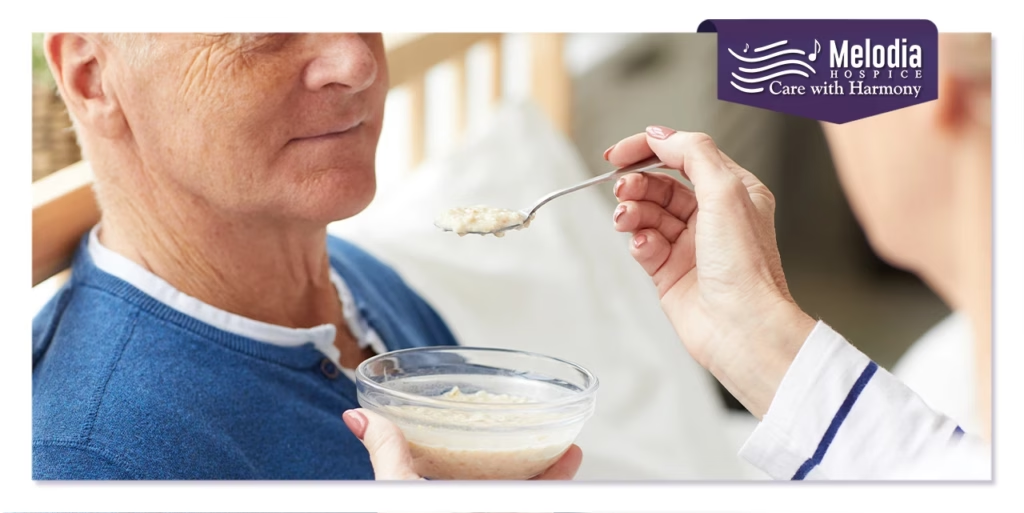
- If they are still able to eat or drink, present a few sips of water or drinks, ice chips, small portions of food with a spoon, or firm candy. When your loved one has had enough, follow her lead.
- If your loved one stops drinking, use swabs, lip balm, or a moist washcloth to keep the lips and mouth moist. Your hospice care staff will often bring your loved one a unique sponge-tipped swab to supply moisture for the mouth.
- If your loved one is unable to eat or no longer wants food, offer alternative sources of consolation, including discussion, music, singing, reading, pet visits, light massage, spiritual or religious rituals, or other acts to demonstrate your love.
Talk to Your Hospice Care Team

Speak with your hospice care team if you are experiencing feelings of anxiety and nervousness regarding your loved one’s dislike of food and beverages. They can clarify the dying process as well as the changes occurring in the body of your loved one. They might offer various ideas to help your loved one feel at ease, displaying their love and concern. For more information about our hospice care, please contact us. You can also learn why you should trust us with the care of your loved one.
Where to get help
When a loved one cuts off food and drink, it can be challenging to understand. However, this is a normal aspect of the dying process, so discontinuing nourishment is not a result of cruelty or neglect. There is no cause for shame or concern as long as the choice has been taken under medical direction. Contact us at Melodia Care Hospice if you require assistance negotiating these choices. Our staff is aware that stopping nutrition can be emotionally draining and can provide tools to enable one to negotiate this process.
Melodia Care Hospice guarantees that caring hands are handling your loved one’s end-of-life care. Get in touch now to find out how Melodia Care Hospice might help you and your loved ones.

Is it normal for hospice patients to stop eating and drinking?
Yes, it is a natural part of the dying process. As the body shuts down, the need for food and hydration decreases. Forcing food or fluids can actually cause discomfort and medical complications.
Does stopping food and drink mean the patient is starving to death?
No. In hospice care, stopping food and drink is not the same as starvation. It reflects the body’s inability to process food, and most patients do not feel hunger or thirst in the same way near the end of life.
How do I know when to stop offering food to a hospice patient?
You should stop offering food when the patient consistently refuses to eat, appears to be in discomfort when eating, or shows signs of difficulty swallowing. Follow the patient’s cues and consult the hospice care team.
Is it cruel to stop feeding a hospice patient?
No. If a patient no longer wants food or cannot safely consume it, continuing to feed them can lead to choking, aspiration, or additional suffering. Allowing the body to shut down naturally is often the most compassionate approach.
You can reach Melodia Care at any time of day or night by contacting us through our 24/7 online customer support chat or by calling 1-888 635-6347 (MELODI-7).